
Water Heater Leak Cleanup in Greenwood: What to Do When Your Tank Fails
By Faulkner Restoration · · 6 min read
Most people never think about their water heater until they walk into the basement or utility room and step into a puddle. A tank can drip quietly for weeks or let go all at once, and either way it can soak flooring, drywall, and everything stored nearby. If you need water heater leak cleanup in Greenwood, this guide walks through what to do first, how professional cleanup and drying work, and what to ask your insurance company.
Why Water Heaters Leak
Water heaters work hard, and they work harder once the weather turns cold around Greenwood, Franklin, and Whiteland. Over the years, sediment settles in the bottom of the tank and the steel inside can corrode. Eventually the tank itself may crack or rust through. Leaks can also start at the connections or valves, which are often easier to fix than a failed tank.
The location matters too. Many water heaters sit in basements, utility closets, garages, or laundry rooms, places nobody checks every day.
- Corrosion or rust that eats through the bottom of an older tank
- Loose or worn supply line connections at the top of the unit
- A drain valve that drips or was not fully closed
- A pressure relief valve that keeps releasing water
What to Do First When Your Water Heater Leaks
Start by stopping the water. Most water heaters have a cold water shutoff valve on the supply line at the top of the tank. Close it if you can reach it safely. If you cannot find it, or the leak is coming from somewhere else, close the main shutoff valve for the house.
Next, deal with the energy source, but only if it is safe. For an electric unit, switch off its breaker, as long as you can reach the panel while standing somewhere dry. For a gas unit, turn the gas control to the off or pilot position. If you smell gas, leave the house and call your gas utility from outside. Remember the water inside the tank may be very hot, so keep your hands and feet clear of it.
- Take photos and video of the tank, the leak, and anything that got wet
- Move boxes, electronics, and keepsakes away from the water
- Keep kids and pets out of the area
- Call a plumber to repair or replace the water heater
- Call a restoration company to handle the water damage
How Water Heater Leak Cleanup in Greenwood Works
Repairing the water heater and repairing the water damage are two different jobs. A plumber takes care of the unit itself. A restoration crew takes care of the floors, walls, and belongings the water reached. The process works a lot like burst pipe and plumbing failure cleanup, since both involve clean water from your home's supply lines.
It begins with an inspection to find out how far the water traveled. Water from a tank spreads out across the floor and then wicks into drywall, baseboards, and carpet pad. Moisture readings help map the wet areas, including the ones you cannot see.
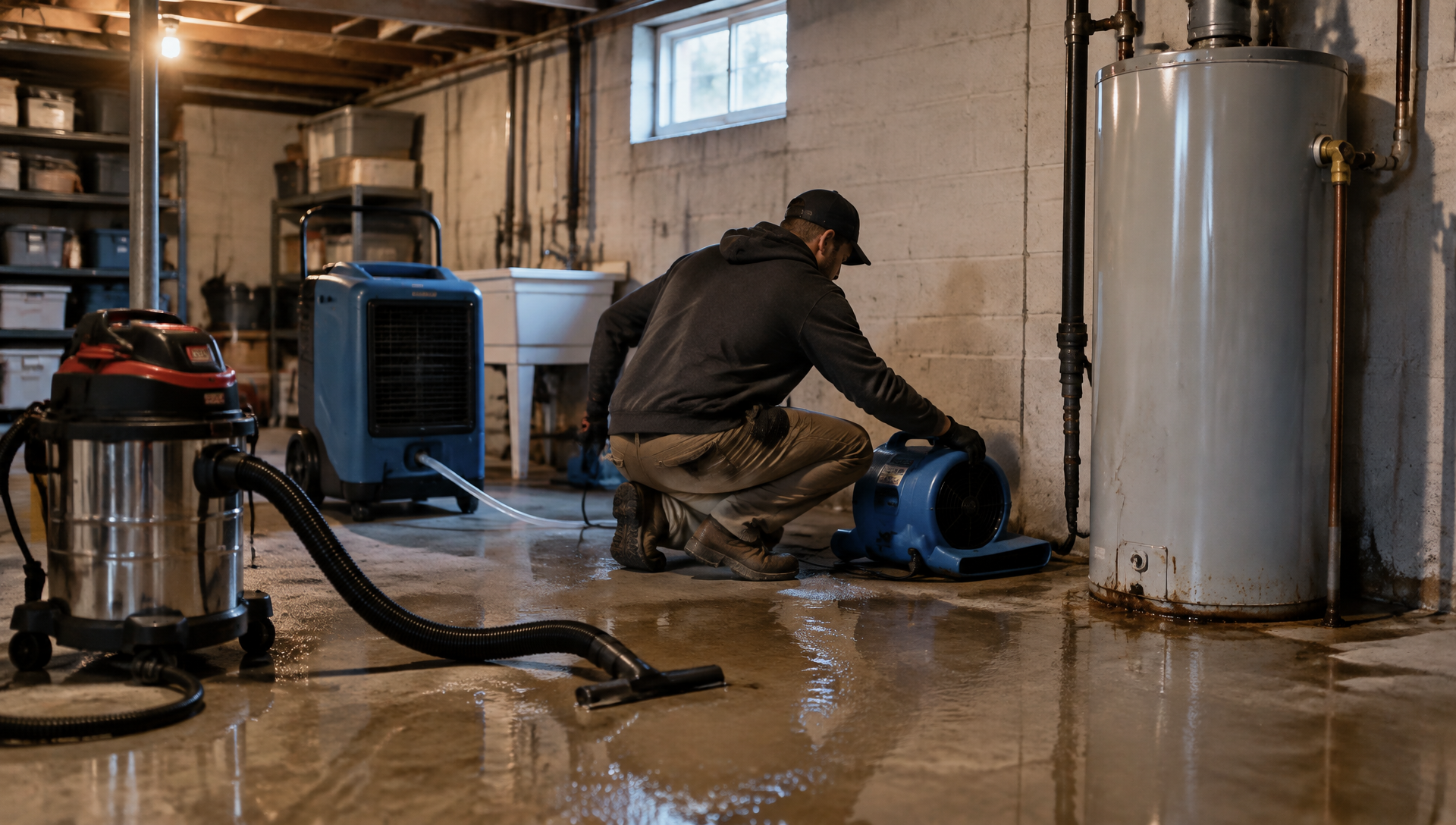
From there, the crew handles emergency water extraction to pull water out of carpet, pad, and hard surfaces. Materials that cannot be saved, like soaked carpet pad or the lower section of swollen drywall, may be removed so the structure behind them can dry. Then comes structural drying and dehumidification, with air movers and dehumidifiers placed based on the size of the space and the materials involved. Follow-up readings show whether the drying is on track, so nobody has to guess based on how things feel.
Slow Leaks and Hidden Damage
A water heater that fails all at once is hard to miss. A slow drip is different. It can soak the subfloor, rot the bottom plate of a wall, and leave a musty smell before you ever see standing water. Watch for rust around the base of the tank, damp drywall nearby, or warped flooring.
Restoration crews may apply mold prevention treatment to affected surfaces during drying. If you already see growth or the smell is strong, Faulkner Restoration also provides mold remediation for Greenwood area homes. Water heaters in basements can also be part of a bigger picture, and the same crews handle sump pump and basement flooding when the water came from more than one place.
Putting Your Basement or Utility Room Back Together
Once readings confirm everything is dry, the work shifts to water damage repair and reconstruction. That can include new drywall, baseboards, flooring, and paint. Having one company handle the drying and the rebuild means fewer contractors to line up.
Water heaters often share space with storage, so boxes, holiday decorations, and furniture may get wet too. Faulkner Restoration offers contents restoration and pack-out, so belongings can be cleaned, dried, and stored while repairs are underway.
Will Insurance Cover a Leaking Water Heater?
Many homeowners policies cover sudden and accidental water damage, so a tank that bursts without warning may be covered. The water heater itself is a different question, since policies often treat a worn out appliance as a maintenance issue. Damage from a slow leak that went on for a long time is frequently excluded, and mold that develops later may have its own limits or exclusions.
Coverage varies from policy to policy, so call your agent or carrier, report the loss promptly, and ask what documentation they need. Keep your photos, the plumber's invoice, and any receipts in one place. Faulkner Restoration can document the damage, work with your adjuster, and offer direct insurance billing when possible, but your insurance company makes the final coverage decision.
Simple Habits That Help Prevent the Next Leak
A few minutes of attention can go a long way. Check around the base of your water heater every month or so for moisture or rust. Ask your plumber about flushing the tank to clear sediment, and have the relief valve looked at during routine service. Also make sure everyone in the house knows where the cold water shutoff and the main shutoff valve are.
Water Heater Leak Help in Greenwood and Central Indiana
Faulkner Restoration is a locally owned company that has been serving Central Indiana since 1992 from its home base in Greenwood. Crews help homeowners in Greenwood, Franklin, Whiteland, Indianapolis, Shelbyville, Martinsville, and nearby communities with water damage, plus storm damage, fire and smoke cleanup, sewage cleanup, emergency board-up, and asbestos abatement.
Dealing with a leaking water heater right now? Call Faulkner Restoration at 317-782-9999, available 24/7, or request emergency service online. If it is safe, shut off the water supply and the power or gas to the unit, and stay clear of any water near electrical hazards while you wait for help to arrive.
Frequently Asked Questions
Is a leaking water heater an emergency?
A steady leak or a tank that has burst should be treated as one. Shut off the water and the energy source if you can do it safely, then call a plumber for the unit and a restoration company for the water damage.
Can I keep using my water heater if it is only dripping?
A drip from a fitting or valve may be a simple repair, but a leak from the tank itself usually means it needs to be replaced. Have a plumber take a look, and keep an eye on the floor and walls nearby for signs of hidden moisture.
How long does it take to dry out after a water heater leak?
It depends on how much water was released, how long it sat, and what materials got wet. Drying usually takes several days, and moisture readings help confirm when the area is ready for repairs.