
Basement Flood Cleanup in Greenwood: What Homeowners Should Know
By Faulkner Restoration · · 6 min read
A wet basement is one of the most common problems Central Indiana homeowners run into, and a heavy fall rain, a failed sump pump, or a burst pipe can turn a finished lower level into a mess overnight. If you need basement flood cleanup in Greenwood, the steps you take in the first few hours really do matter. This guide walks through what to do right away, what professional cleanup involves, and how to tell when it is time to call for help.
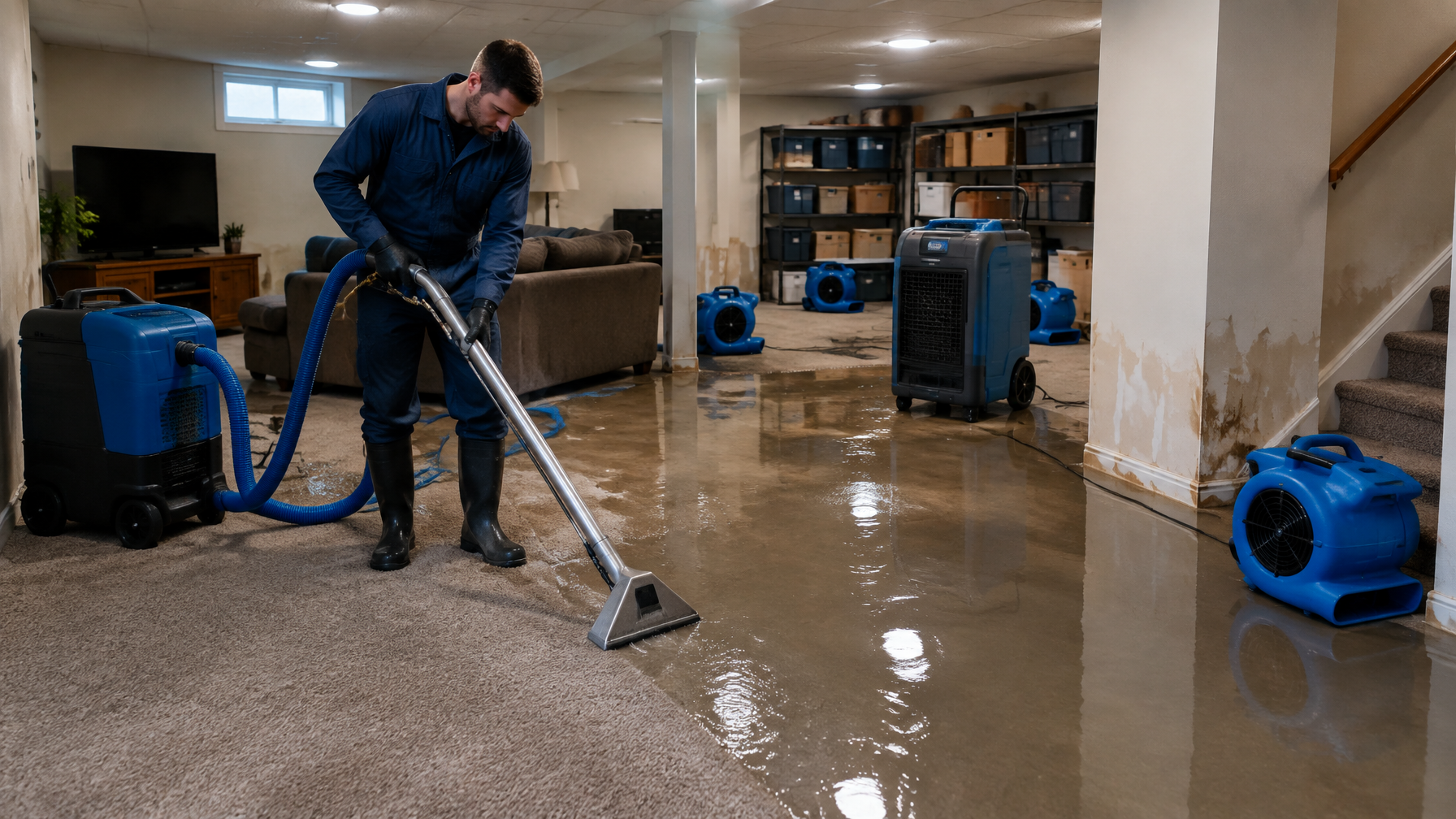
Common Causes of a Flooded Basement in Greenwood
Most basement floods around Greenwood, Franklin, and Whiteland trace back to a handful of sources. Heavy rain can overwhelm a sump pump or push groundwater through foundation cracks. A pump can quit during a power outage or simply wear out. Inside the house, a burst supply line, a leaking water heater, or a loose washing machine hose can release a lot of water before anyone notices, especially in a basement nobody walks through every day.
- Sump pump failure or a power outage during a storm
- Heavy rain and groundwater seeping through foundation walls or floor cracks
- Burst or frozen pipes
- Water heater or washing machine leaks
- Clogged gutters or short downspouts that dump water against the foundation
What to Do First When Your Basement Floods
Safety comes before anything else. If water is anywhere near outlets, extension cords, appliances, or the electrical panel, stay out of the basement. Only shut off power at the breaker if you can reach it while standing somewhere dry. If you are not sure, wait for help.
- Stop the water if you can do it safely, such as closing the main valve for a plumbing leak
- Keep kids and pets out of the area
- Take photos and video of the water, the source, and damaged belongings before moving anything
- Move dry valuables, documents, and electronics to an upper floor
- Do not use a regular household vacuum on standing water
How Professional Basement Flood Cleanup in Greenwood Works
A typical cleanup starts with an inspection to find the source, check for safety concerns, and see how far the water has traveled. Water in a basement rarely stays where you can see it. It wicks up drywall, soaks into carpet pad, and settles under flooring and along the bottom of finished walls.
From there, the crew starts emergency water extraction to remove standing water. Wet materials that cannot be saved, like soaked carpet pad or saturated drywall, may be removed so the structure underneath can dry. Next comes structural drying and dehumidification, with air movers and dehumidifiers placed based on the size of the space and the materials involved. Technicians take moisture readings along the way to confirm the drying is actually working instead of guessing based on how things feel.
Once everything is dry, the focus shifts to water damage repair and reconstruction, such as new drywall, trim, flooring, and paint. Working with one company for the whole job means you are not coordinating a separate drying crew and a separate contractor.
Why Basement Water Should Not Sit
Basements already tend to be cooler and more humid than the rest of the house, so wet materials down there can stay damp for a long time. The longer drywall, carpet, and wood framing stay wet, the more likely they are to warp, break down, or start growing mold. A box fan and an open window usually cannot pull moisture out of wall cavities or from under flooring.
That is why restoration crews often apply mold prevention treatment to affected surfaces during the drying process. If you are already seeing fuzzy growth or smelling a strong musty odor, Faulkner Restoration also provides mold remediation for homes in Greenwood and across Central Indiana. And if the water came up through a floor drain or toilet and smells like sewage, treat it as contaminated and avoid contact. That calls for sewage cleanup, which is handled differently from a clean water leak.
Saving What You Store in the Basement
Basements are where a lot of families keep holiday decorations, old photos, spare furniture, and boxes of keepsakes. Some of it can be cleaned and dried, and some of it cannot. Porous items like cardboard boxes and mattresses, and anything soaked by contaminated water, are often not worth saving. Hard furniture, many textiles, and important papers sometimes can be. Faulkner Restoration offers contents restoration and pack-out, so belongings can be moved out of the way, cleaned, and stored while the basement is dried and repaired.
Will Insurance Cover a Flooded Basement?
It depends on your policy and on where the water came from. Many homeowners policies cover sudden, accidental water damage, like a pipe that bursts. Water from outside the home, such as surface flooding or groundwater, is often excluded from standard policies and may require separate flood coverage. Damage from a failed sump pump or a backed up drain may only be covered if your policy includes a water backup endorsement.
Coverage varies from policy to policy, so call your agent or carrier, report the loss promptly, and ask what documentation they need. Keep your photos, receipts, and notes together. Faulkner Restoration can document the damage, work with your adjuster, and offer direct insurance billing when possible, but your insurance company makes the final coverage decision.
Preventing the Next Basement Flood
After the cleanup, a few simple habits can lower the odds of a repeat. Test your sump pump each season by slowly pouring a bucket of water into the pit and making sure it kicks on. Consider a battery backup pump if storms tend to knock out your power. Keep gutters clear and make sure downspouts carry water well away from the foundation. Keep an eye on the water heater and washer hoses, and fix small leaks before they turn into big ones.
Basement Flood Help in Greenwood and Central Indiana
Faulkner Restoration is a locally owned company that has been serving Central Indiana since 1992 from its home base in Greenwood. Crews help homeowners in Greenwood, Franklin, Whiteland, Indianapolis, Shelbyville, Martinsville, and nearby communities with sump pump and basement flooding, plus storm damage, fire and smoke cleanup, and other restoration needs.
Dealing with water in your basement right now? Call Faulkner Restoration at 317-782-9999, available 24/7, or request emergency service online. If it is safe, stop the water source and stay clear of any water near electrical hazards while you wait for help to arrive.
Frequently Asked Questions
How long does basement flood cleanup take?
It depends on how much water there was, what materials got wet, and how much repair is needed. Drying alone usually takes several days, and moisture readings help confirm when the structure is ready for repairs.
Can I clean up a flooded basement myself?
A small amount of clean water on a bare concrete floor can sometimes be handled with a wet vac and good airflow. If water reached drywall, carpet, or finished flooring, came in from outside, or may be contaminated, professional extraction and drying is the safer choice.
Is basement flood water dangerous?
It can be. Water near electrical equipment is a shock hazard, and water from outside or from a drain backup can carry contaminants. If you are not sure where the water came from, avoid contact and keep kids and pets away.