
Burst Pipe Cleanup in Greenwood: What Happens After a Pipe Breaks
By Faulkner Restoration · · 6 min read
A burst pipe never picks a convenient time. It usually happens on the coldest night of the year, while you are at work, or when the family is out of town for the holidays. If you need burst pipe cleanup in Greenwood, knowing what happens next can take a lot of the stress out of a bad day. This guide covers what to do in the first few minutes, how professional cleanup and drying work, and what to ask your insurance company.
Why Pipes Burst in Greenwood Homes
Most burst pipes around Greenwood, Franklin, and Whiteland happen during cold snaps, when water freezes inside a line and pressure builds until something gives. Pipes in exterior walls, crawl spaces, unheated garages, and under sinks on outside walls are the usual suspects. Freezing is not the only cause, though. Older supply lines wear out, fittings loosen, and appliance hoses crack with age.
One tricky detail: a frozen pipe often does not leak until it thaws. Many homeowners find the damage the morning after a cold night, once the temperature climbs and water starts flowing through the split.
- Water freezing in pipes along exterior walls, crawl spaces, or attics
- Aging or corroded supply lines and fittings
- Failed washing machine, dishwasher, or refrigerator supply lines
- Pipes in vacant homes or rooms where the heat was turned down
What to Do Right After a Pipe Bursts
Your first job is to stop the water. Find the main shutoff valve, which is often in the basement, crawl space, utility room, or near the water heater, and close it. If the leak is coming from a single fixture or appliance, closing its supply valve may be enough.
Then think about safety. If water is spreading near outlets, cords, appliances, or the electrical panel, stay out of that area. Shut off power at the breaker only if you can reach it while standing somewhere dry. If you are not sure, wait for help.
- Take photos and video of the broken pipe, the water, and damaged belongings
- Move electronics, documents, and keepsakes to a dry area
- Keep kids and pets away from wet floors and fallen ceiling material
- Call a plumber to repair the broken line
- Call a restoration company to handle the water damage
How Burst Pipe Cleanup in Greenwood Works
Fixing the pipe and fixing the water damage are two separate jobs. A plumber repairs the line. A restoration crew deals with everything the water touched. Faulkner Restoration handles burst pipe and plumbing failure cleanup for homes across Central Indiana, and the process usually follows a clear path.
It starts with an inspection to see where the water went. Water from a pipe inside a wall or ceiling often travels farther than it looks, running along framing, soaking insulation, and spreading under flooring. Moisture readings help map the wet areas, including spots you cannot see.
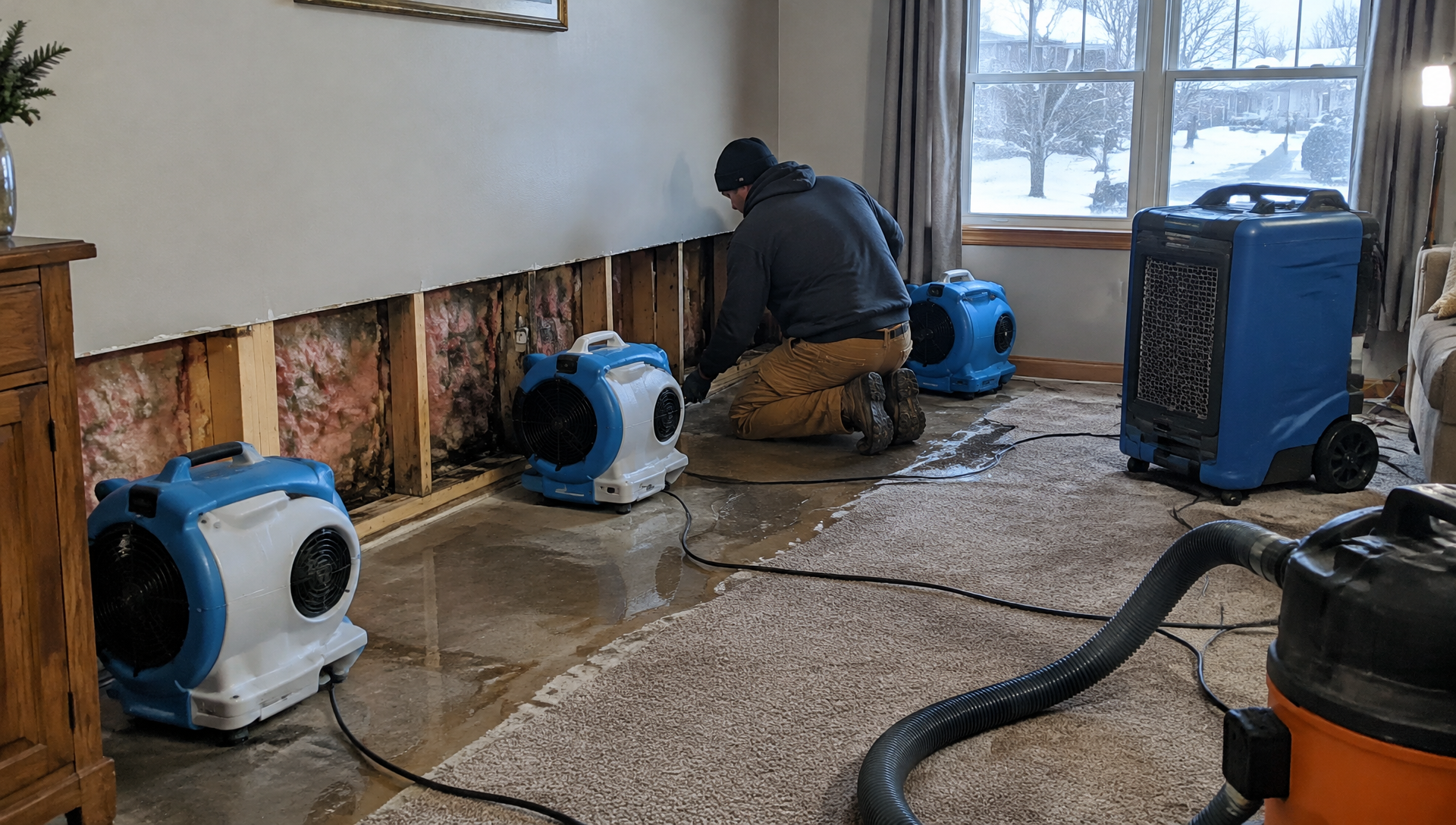
Next comes emergency water extraction to pull standing water out of carpet, pad, and hard floors. Materials that cannot be saved, like soaked insulation or swollen drywall, may be removed so the space behind them can dry. Then the crew sets up structural drying and dehumidification, placing air movers and dehumidifiers based on the size of the space and the materials involved, and checking progress with follow-up readings instead of guessing based on how things feel.
Hidden Water Behind Walls and Ceilings
When a pipe bursts inside a wall or above a ceiling, the water you see is only part of the story. Insulation holds water like a sponge, and drywall can wick moisture upward. If those cavities are closed up while they are still damp, the materials can warp, stain, or start growing mold weeks later.
That is why crews sometimes cut small access openings or remove the lower section of a damaged wall. It can look like more damage at first, but it lets air reach the wet framing so the structure can dry properly. Restoration crews may also apply mold prevention treatment to affected surfaces during the drying process. If you already notice a musty smell or visible growth, Faulkner Restoration also provides mold remediation for Greenwood area homes.
Putting Your Home Back Together
Once moisture readings confirm the structure is dry, the focus shifts to water damage repair and reconstruction. That can include new drywall, insulation, trim, flooring, and paint. Working with one company for both the drying and the rebuild means you are not juggling separate contractors or trying to line up schedules on your own.
If furniture, clothing, or boxed belongings got wet, Faulkner Restoration offers contents restoration and pack-out, so items can be cleaned, dried, and stored while the work is underway. The same crews also handle sump pump and basement flooding, so a burst line in a finished basement is familiar territory.
Will Insurance Cover a Burst Pipe?
Many homeowners policies cover sudden and accidental water damage, and a pipe that breaks without warning often falls into that category. Damage from a slow leak that went on for weeks or months is a different story and is frequently excluded. Some policies also look at whether the home was kept heated during cold weather, and mold that develops later may have its own limits or exclusions.
Coverage varies from policy to policy, so call your agent or carrier, report the loss promptly, and ask what documentation they need. Keep your photos, the plumber's invoice, and any receipts together. Faulkner Restoration can document the damage, work with your adjuster, and offer direct insurance billing when possible, but your insurance company makes the final coverage decision.
Lowering the Odds of Another Burst Pipe
After the repairs are done, a few winter habits go a long way. Keep the heat on, even when you travel. Open cabinet doors under sinks on exterior walls during cold snaps so warm air can reach the pipes. Disconnect garden hoses before the first hard freeze, and add foam insulation to exposed lines in crawl spaces and garages. It also helps to make sure everyone in the house knows where the main shutoff valve is before they ever need it.
Burst Pipe Help in Greenwood and Central Indiana
Faulkner Restoration is a locally owned company that has been serving Central Indiana since 1992 from its home base in Greenwood. Crews help homeowners in Greenwood, Franklin, Whiteland, Indianapolis, Shelbyville, Martinsville, and nearby communities with water damage, plus storm damage, fire and smoke cleanup, sewage cleanup, emergency board-up, and asbestos abatement.
Dealing with a burst pipe right now? Call Faulkner Restoration at 317-782-9999, available 24/7, or request emergency service online. If it is safe, shut off the main water valve and stay clear of any water near electrical hazards while you wait for help to arrive.
Frequently Asked Questions
How long does burst pipe cleanup take?
It depends on how much water was released, where it traveled, and what materials got wet. Drying alone usually takes several days, and moisture readings help confirm when the structure is ready for repairs.
Should I call a plumber or a restoration company first?
Shut off the water first, then call both. A plumber repairs the broken line, and a restoration company handles extraction, drying, and repairs to the areas the water reached. Getting the drying started early can help limit how far the damage spreads.
Can I dry out a burst pipe leak with household fans?
Fans can help with a small spill on a hard floor. When water gets into walls, ceilings, insulation, or under flooring, household fans usually cannot reach it, and professional drying with moisture monitoring is the safer choice.